
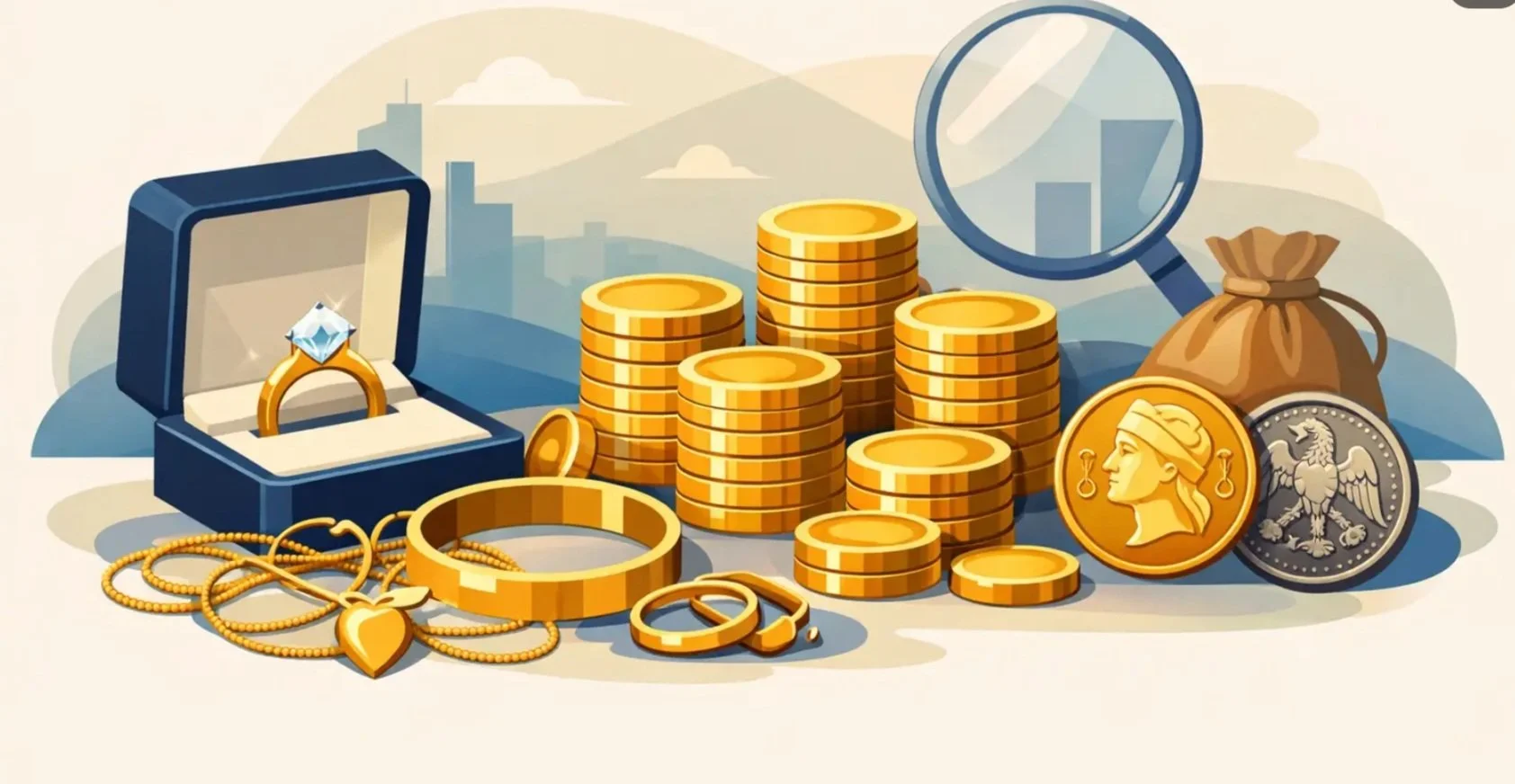
Selling Your Old Gold Jewelry and Rare Coins: How to Get the Best Value
Most people wait too long to sell because they are not sure what they have, what it is worth, or whether they will get a fair offer. If you are thinking about selling your old gold jewelry and rare coins, the process gets much easier when you know how buyers evaluate each item and what separates scrap value from collectible value.
Gold jewelry and rare coins may both contain precious metal, but they are not priced the same way. Jewelry is often valued by metal content, condition, brand, and whether a piece can be resold as jewelry. Coins can depend on metal content too, but collector demand, rarity, mint mark, date, condition, and authenticity can change the price quickly. That is why a one-size-fits-all offer usually is not a good sign.
## Selling my old gold jewelry and rare coins starts with knowing what you have
Start with a basic sort at home. Put gold jewelry in one group and coins in another. Separate wearable jewelry from broken chains, single earrings, bent rings, and pieces with missing stones. With coins, keep anything old, unusual, or in protective holders separate from common bullion or circulated pieces.
Do not clean anything before bringing it in. Polishing jewelry can remove detail or damage finishes. Cleaning coins is even riskier. A cleaned coin can lose collector value, sometimes significantly. Leave items as they are and let a professional examine them.
If you have original boxes, receipts, appraisals, coin flips, or grading paperwork, bring those too. They may not guarantee a higher price, but they help establish what the item is and how it should be evaluated.
## What affects the value of old gold jewelry
With gold jewelry, purity matters first. Buyers look at karat content such as 10K, 14K, 18K, or higher, then confirm weight and test the metal. A heavier piece with higher purity usually carries more raw gold value, but that is not the whole picture.
Some items are worth more than melt. Designer pieces, well-made vintage jewelry, and items in strong wearable condition may be resold rather than scrapped. Diamonds and colored stones can add value, although not every stone contributes equally. Small accent stones may have little resale impact, while larger natural diamonds or high-quality gemstones can matter.
Condition also plays a role, but not always the way people expect. Broken gold jewelry still has value because the metal itself has value. A snapped bracelet or dented ring is not automatically worthless. In many cases, it is still worth bringing in for an offer.
## What affects the value of rare coins
Coin pricing can be more nuanced. Two coins with the same silver or gold content may sell for very different amounts depending on rarity and condition. Date, mint mark, strike quality, collector demand, and whether the coin has been altered all matter.
Bullion coins are generally more straightforward because their value tracks the metal market more closely. Collector coins are different. An older coin is not always a rare coin, and a shiny coin is not always a more valuable one. That is why in-person evaluation matters.
If your coins are inherited, avoid spending or mixing them with loose change before having them reviewed. Even a small group may include pieces with better collector value than face value or melt value.
## What to expect from a local buyer
A reputable local buyer should explain how the offer is being calculated. For gold jewelry, that usually means discussing purity, weight, and whether the item has resale appeal beyond scrap. For coins, it means separating bullion value from collectible value and identifying anything that deserves closer attention.
The advantage of working with a specialty buyer instead of a general secondhand shop is simple: better item-by-item judgment. A store that deals in both jewelry and coins can assess mixed estates, inherited collections, and small personal lots without treating everything like scrap.
That matters when you have a combination of broken gold, wearable pieces, old pocket coins, silver dollars, or boxed coin sets. One item may be valued for metal, another for collectibility, and another for both.
## How to prepare before you sell
Bring a valid ID and allow enough time for a proper review. If possible, group similar items together, but do not tape coins into homemade holders or knot chains tightly. Presentation does not need to be perfect. Organization simply helps the evaluation move faster.
It also helps to know your goal. Some people want to sell everything at once. Others want to compare offers, sell only duplicates, or keep sentimental pieces and part with the rest. There is no single right approach. If an item has family history but limited market value, keeping it may make more sense than selling it. If it has been sitting in a drawer for years, turning it into cash may be the better use.
For Boise-area sellers, a local in-person conversation is often the most efficient path. Boise Diamond Ring & Coin works with customers who want a straightforward review of jewelry, precious metals, and collectible coins in one place.
When you are ready, the smartest move is not guessing from online price charts or assuming every old item is rare. It is getting a clear, honest evaluation from someone who knows the difference.